|
|
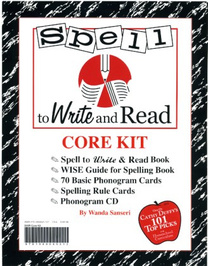
Spell to Write and Read (SWR) isn't a "get rich quick" or "start reading immediately" type of program. Students are not pushed to pick up an easy-to-read beginner's book and force their way through the text. As Wanda has explained in her weekend seminars, there's no "torture reading" in SWR. Instead, SWR's goal is to build a solid foundation for long-term reading, spelling, handwriting, and writing success.
I've personally used Spell to Write and Read with the following types of students:
I've personally used Spell to Write and Read with the following types of students:
- young children who are non-readers and haven't been taught anything about reading or spelling
- upper elementary children who are slow readers and struggle immensely with spelling
- an almost-18-year-old who could only read his own name and a few very short words like to, and, is, etc. due to an extreme visual tracking disorder

|
I've also used SWR with students who are:
|
Spell to Write and Read's first major step is to teach the child to recognize and reproduce from memory the written symbols for the sounds that they hear in the spoken word. The 26 letters of the alphabet are taught over 5-7 days' time...no dragging out the letters of the alphabet for 26 weeks or anything crazy like that! That's an insult to a child's intelligence, by the way, especially if they are 5-6 years old, in most cases.
Students are either taught the 26 letters and their sounds either in cursive (by cursive stroke groupings), which is the preferred method for ages 6+, or by manuscript (printing), in groupings as set up with the SWR flash cards. Each day for five days, five letters are taught to the student in a technique that provides solid instruction on handwriting skills. (A sixth letter is taught on day five.) This is also a multi-sensory approach, as the student says the sounds of each letter as he writes the letter in the exact method taught in SWR. The student is:
- seeing
- hearing
- saying
- writing
the letter at the same time. This enables this method to work well with a variety of students who learn using different methods (visual, auditory, kinesthetic).
For example, the letter A has three distinct sounds: a (short A sound), A (long A sound), and ah.
Even for adult students, this is taught quickly and easily in a method that isn't insulting to them. ☺
The English language has 45 sounds that are spelled in 70 different ways, which SWR calls "phonograms". What's very helpful is that these phonograms are taught without any other distractions like pictures, cutesy songs, etc. Many spelling programs use those kinds of methods, but they actually detract from the learning, or they use another part of the brain for memory cues, which is slower and less reliable when actually reading and spelling.
Within one week's time, the student knows the alphabet with all of its sounds, and how to write the letters correctly and legibly. (Sometimes, knowing how to write legibly and actually being able to do it takes time, as you would probably guess!) Students who have difficulty with fine motor skills/writing legibly even with cursive can write their letters in sand, pudding, salt, on a chalkboard with chalk, on a whiteboard with dry erase markers, or in the air with their finger.
How is this different from most other reading/spelling programs?
Most reading programs start out with a very small set of sounds to learn. They may learn a few hard consonant sounds and a few short vowel sounds so they can read the words at, cat, hat, sat, etc. Unfortunately, this limits them to only reading "canned" books and text that only uses those same, exact sounds. This actually slows down the reading/decoding process! With SWR, the students learn all of the sounds of the 26 letters of the alphabet at once. This enables them to select from a much wider set of beginning reading books that use more sounds in English, building confidence!
How is this different from most other reading/spelling programs?
Most reading programs start out with a very small set of sounds to learn. They may learn a few hard consonant sounds and a few short vowel sounds so they can read the words at, cat, hat, sat, etc. Unfortunately, this limits them to only reading "canned" books and text that only uses those same, exact sounds. This actually slows down the reading/decoding process! With SWR, the students learn all of the sounds of the 26 letters of the alphabet at once. This enables them to select from a much wider set of beginning reading books that use more sounds in English, building confidence!
|
|
|
|
|
|
|
|
|

While I personally think Spell to Write and Read is the best spelling curriculum out there for most children, it is more teacher-intensive on Mondays and maybe one other day of the week than other spelling curriculum. I know that having more than two children would make it tougher to teach spelling using a curriculum that is more teacher/parent-intensive.
However, I look at spelling skills like this:
Everything we write is "judged" by employers, college professors, fellow employees, and others, all of our lives. People who have poorer spelling skills are often looked down upon by those who are well-educated and spell well.
For me, I'd rather focus my energies upon teaching spelling well, and then leading into solid good writing instruction, and also focusing on math skills. Those would be the two areas in which I would really focus on spending my instruction time with my children.
So many other subjects can just be read about. History, science, literature. Now, I only have two children, and they don't have any learning disabilities, so that may seem daunting to you. I don't know your situation except that you've mentioned that you have more children than I do.
Once a child can read and spell well, and then begins to write well, the world is opened up to him or her! Everything becomes easier.
If I had more than 3 children, I'd group them into 2-3 groups, even if they were spread apart by a few years, and begin instruction with Spell to Write and Read. SWR proceeds at such a quick pace, as far as ability levels, that in a few months, each child (if they started at the beginning as a non-reader) would be at about the 3rd or 4th grade spelling level. After one year using SWR, they'd be in the 5th-7th grade spelling level. So it wouldn't matter if my jr. higher or high schooler was a poor speller and started at the beginning or near the beginning of SWR. They would catch up very quickly unless they had a language disorder/reading/spelling challenge.
We chose to use SWR like this:
Monday: parent dictates new spelling list to each child (or grouped children, depending on ages and ability levels).
Tuesday: parent works through a reference page with child (or grouped children), if one is required work that week. Children practice their spelling words, either writing them out (many ways to do this to make it fun) or using SpellQuizzer computer software (separate from SWR, so an additional purchase, but easy for children to use.)
Wednesday: children continue to practice their words on their own. Can listen to their word list on audio CDs (separate purchase from SWR but made by the same company) or however mom wants them to practice their words.
Thursday: we always played a game to have them practice their lists of words one last time. Used any board game or card game, and in order for them to get their turn, they needed to spell the spelling word correctly from their list.
Friday: either parent tests child(ren) with spelling list words, or children use SWR audio CDs to test themselves, pausing the CD between each word so they may write their words down neatly.
Using this kind of format, the parent is primarily working with each child separately or in small groups on Monday, to dictate the new list of words. This is required - and cannot be altered. The dictation process of SWR's new spelling lists each week is one of the key components that makes it work!
On the other days of the week, Mom doesn't really need to be all that involved, unless a child has a very difficult time working on his own. Or, an older child can quiz that child so mom is free to do other things.
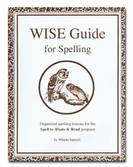
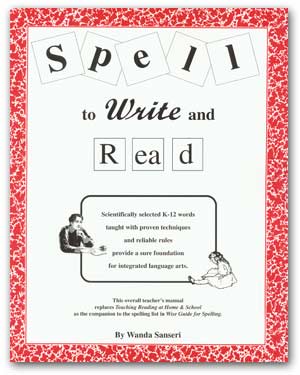
Spell to Write and Read has a little bit of a learning curve for the parent, because there is so much info. in the teacher's guide (first 48 pages or so) that is helpful info. for parents whose children don't yet read. Most parents start using the teacher's guide on about page 49 or so to begin teaching their children using the program. That seems to work well and isn't so overwhelming.
There are at least two other programs that are similar to SWR that may be a bit more "parent friendly" or not as teacher intensive: All About Spelling, and The Phonics Road to Spelling and Reading. They both use similar methods to SWR, but may work better with larger families.
However, I look at spelling skills like this:
Everything we write is "judged" by employers, college professors, fellow employees, and others, all of our lives. People who have poorer spelling skills are often looked down upon by those who are well-educated and spell well.
For me, I'd rather focus my energies upon teaching spelling well, and then leading into solid good writing instruction, and also focusing on math skills. Those would be the two areas in which I would really focus on spending my instruction time with my children.
So many other subjects can just be read about. History, science, literature. Now, I only have two children, and they don't have any learning disabilities, so that may seem daunting to you. I don't know your situation except that you've mentioned that you have more children than I do.
Once a child can read and spell well, and then begins to write well, the world is opened up to him or her! Everything becomes easier.
If I had more than 3 children, I'd group them into 2-3 groups, even if they were spread apart by a few years, and begin instruction with Spell to Write and Read. SWR proceeds at such a quick pace, as far as ability levels, that in a few months, each child (if they started at the beginning as a non-reader) would be at about the 3rd or 4th grade spelling level. After one year using SWR, they'd be in the 5th-7th grade spelling level. So it wouldn't matter if my jr. higher or high schooler was a poor speller and started at the beginning or near the beginning of SWR. They would catch up very quickly unless they had a language disorder/reading/spelling challenge.
We chose to use SWR like this:
Monday: parent dictates new spelling list to each child (or grouped children, depending on ages and ability levels).
Tuesday: parent works through a reference page with child (or grouped children), if one is required work that week. Children practice their spelling words, either writing them out (many ways to do this to make it fun) or using SpellQuizzer computer software (separate from SWR, so an additional purchase, but easy for children to use.)
Wednesday: children continue to practice their words on their own. Can listen to their word list on audio CDs (separate purchase from SWR but made by the same company) or however mom wants them to practice their words.
Thursday: we always played a game to have them practice their lists of words one last time. Used any board game or card game, and in order for them to get their turn, they needed to spell the spelling word correctly from their list.
Friday: either parent tests child(ren) with spelling list words, or children use SWR audio CDs to test themselves, pausing the CD between each word so they may write their words down neatly.
Using this kind of format, the parent is primarily working with each child separately or in small groups on Monday, to dictate the new list of words. This is required - and cannot be altered. The dictation process of SWR's new spelling lists each week is one of the key components that makes it work!
On the other days of the week, Mom doesn't really need to be all that involved, unless a child has a very difficult time working on his own. Or, an older child can quiz that child so mom is free to do other things.
Spell to Write and Read has a little bit of a learning curve for the parent, because there is so much info. in the teacher's guide (first 48 pages or so) that is helpful info. for parents whose children don't yet read. Most parents start using the teacher's guide on about page 49 or so to begin teaching their children using the program. That seems to work well and isn't so overwhelming.
There are at least two other programs that are similar to SWR that may be a bit more "parent friendly" or not as teacher intensive: All About Spelling, and The Phonics Road to Spelling and Reading. They both use similar methods to SWR, but may work better with larger families.
Photos used under Creative Commons from Inspired Photography CT, planeta
